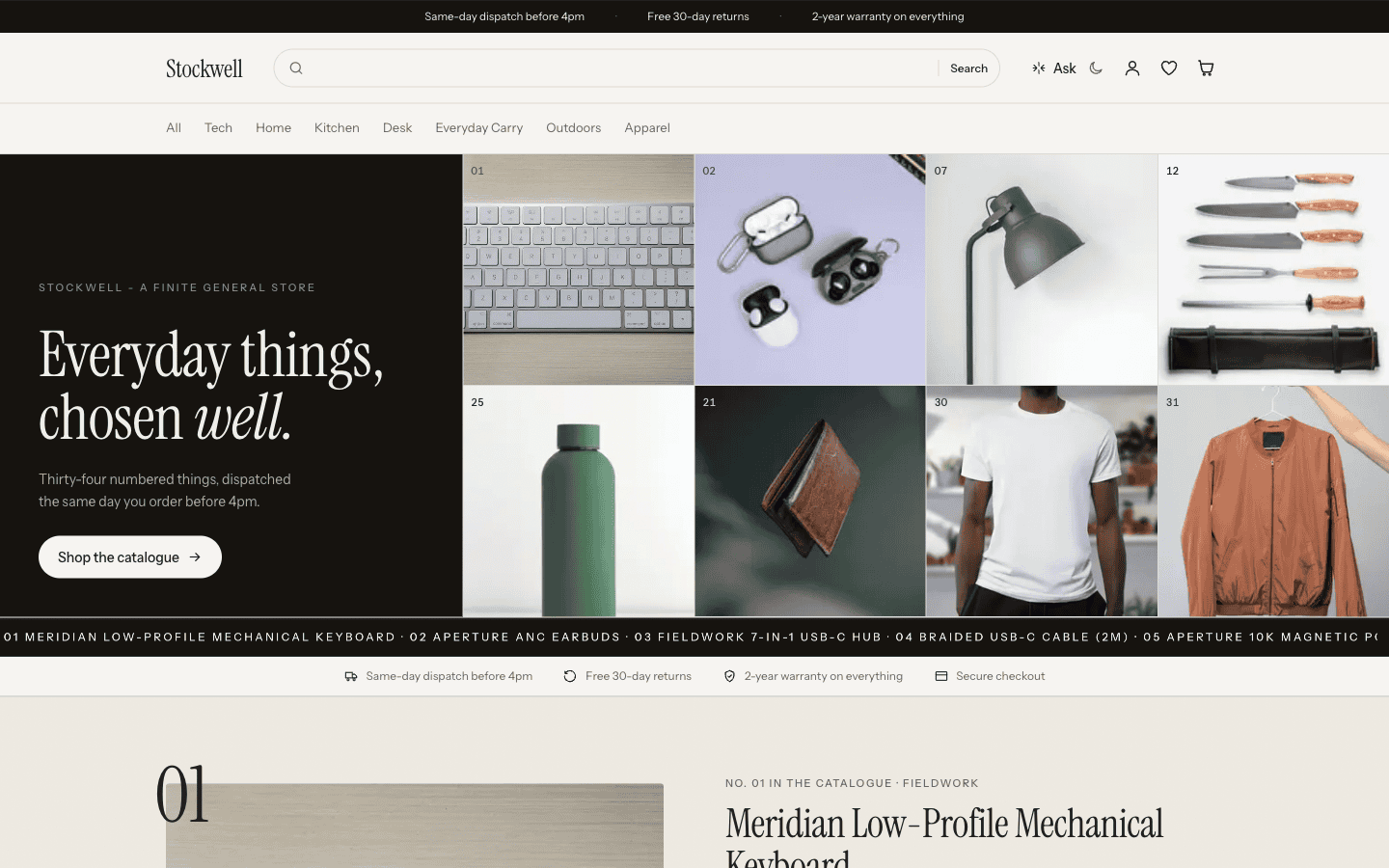
Here's a problem every AI product hits: the demo only works if someone plugs in an API key. Share the repo, and the first thing a new developer sees is a wall of errors because ANTHROPIC_API_KEY isn't set. Put it in a template, and buyers can't run it until they've signed up for a provider. Deploy a preview, and it costs you tokens every time a stranger clicks around. There's a pattern that solves all of this: build the AI feature so it runs with zero keys, and make going live a one-function swap.
The trick: a mock engine that streams like the real thing
The key insight is that your UI shouldn't care where the tokens come from. If the streaming interface consumes a stream of text chunks, it doesn't matter whether those chunks are generated by a model or by a function that returns canned, context-aware replies and streams them token by token. So you build the mock to behave exactly like the real thing: keyword-match the prompt to a sensible answer, then stream it out with small delays so it feels alive.
// A keyless engine that streams like a real model.
const REPLIES: { match: RegExp; reply: string }[] = [
  { match: /metric|summary|how.*doing/i, reply: 'MRR is up 8.2% this week...' },
  { match: /invite|teammate/i, reply: 'To invite a teammate: open Settings...' },
];

const FALLBACK = 'In this demo I answer from a small set of canned replies so it runs with no API key.';

export function generateReply(prompt: string): string {
  return REPLIES.find((r) => r.match.test(prompt))?.reply ?? FALLBACK;
}
Then the UI streams that string one token at a time - the same loop it would use for a real model - so the mock is visually indistinguishable from a live assistant:
const tokens = generateReply(prompt).split(/(\s+)/);
let out = '';
for (const token of tokens) {
  out += token;
  setMessage(out);              // re-render as it "streams"
  await new Promise((r) => setTimeout(r, 20));
}
Related template
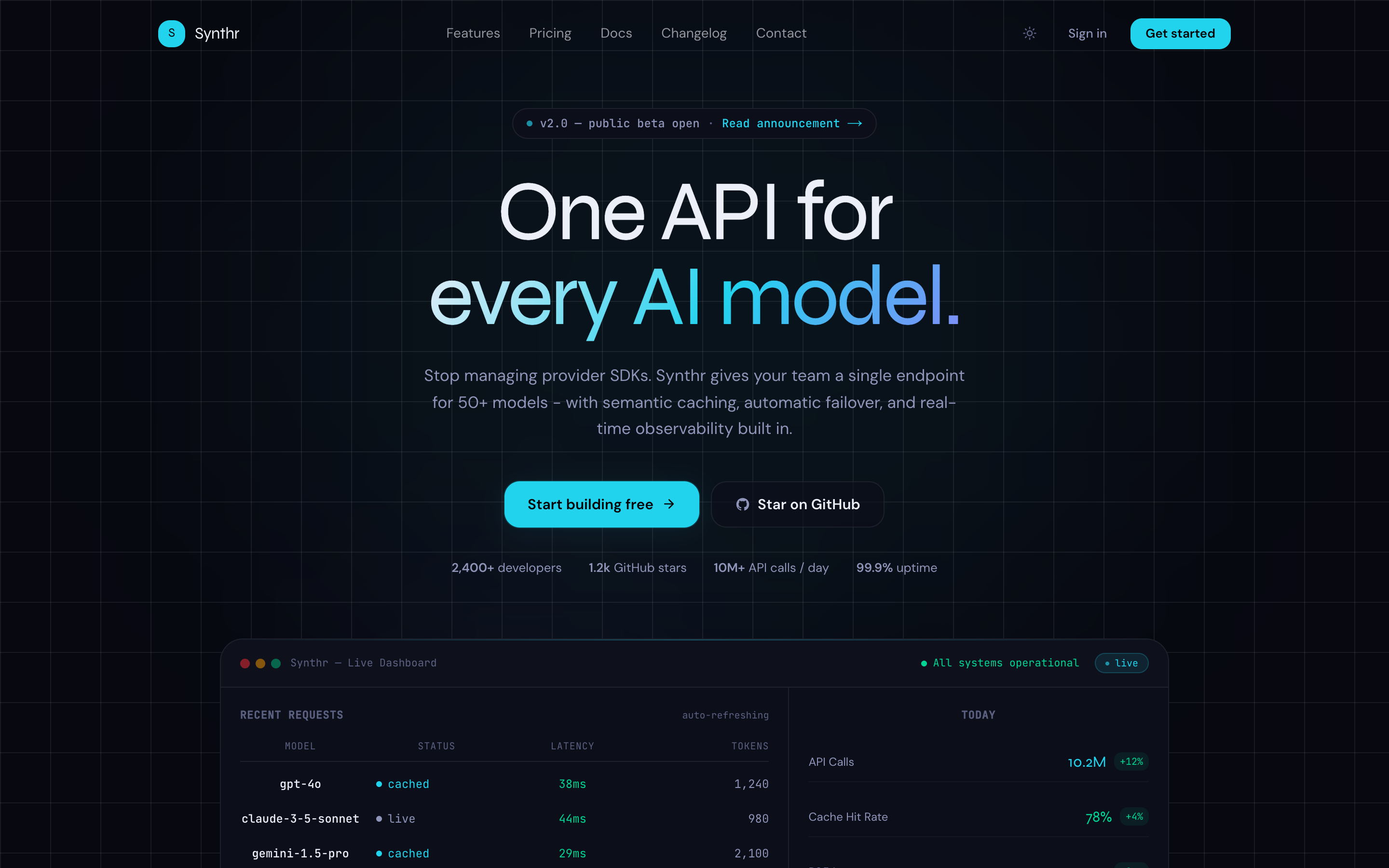
AI SaaS LandingA dark-first AI SaaS landing page with bento features, animated hero dashboard, pricing toggle, blog, changelog, docs, and auth pages.
Why this is worth doing
Making the AI keyless by default isn't a shortcut - it removes friction at every point where someone first meets your product.
- Demos never break - anyone can click the live preview and the assistant just works, at zero token cost to you
- Templates and open-source repos run on first clone, before any signup
- Onboarding is instant - new devs see the feature working before they wire anything
- Tests are deterministic - no network, no key, no flaky model responses in CI
- Design and iteration happen offline - you can build the whole UI on a plane
Get the free template, plus new drops
DocsKit Free lands in your inbox right away. New templates after that.
The one-function swap to go live
Because the entire model lives behind a single function, going from demo to production is a swap, not a rewrite. Replace the body of generateReply with a real streaming call (Claude via the Vercel AI SDK, behind a route handler so your key stays server-side) and the streaming UI never changes - it's still consuming a token stream, just a smarter one.
The principle underneath: isolate the model behind one seam. Whether the tokens come from a canned reply or a frontier model is an implementation detail the UI should never know about. Get that boundary right and the same codebase runs as a keyless demo and a production product.
Keel is built exactly this way - a keyless mock engine powers the assistant, Ask AI slide-over, and Cmd+K bar out of the box, then swaps to Claude via the Vercel AI SDK in one function. From $79, one-time.
See Keel